EcoFlow vs Jackery (2026): Which Portable Power Station Brand Is Better?
Spec-backed EcoFlow vs Jackery comparison: pricing, charging speed, cycle life, warranty, and the right pick for camping, apartment backup, and home use. Both run LiFePO4 in 2026.
Quick answer
Neither brand is universally better - it comes down to use case. EcoFlow generally wins on price-to-capacity ratio and charging speed across the lineup. Jackery wins on rated cycle life and simplicity. Both ship LiFePO4 chemistry on every current model, both offer 5-year warranties on flagship units, and both are well-supported in North America.
EcoFlow and Jackery are the two best-known portable power station brands in North America. They compete head-to-head at every capacity tier from ~250 Wh up to ~2 kWh and beyond. This comparison is based on each brand's currently shipping lineup as of 2026 - both have moved fully to LiFePO4 chemistry, both ship modern fast-charging tech, and both publish detailed spec sheets you can verify yourself. Older reviews comparing first-generation NMC Jackery and EcoFlow units do not reflect the current product lines.
Quick Winner by Scenario
RIVER 2 Pro charges in 70 min, Delta 3 Plus in 56 min. Jackery's fastest is the 600 Plus at 60 min.
EcoFlow RIVER 3 ($239, 245Wh) vs Jackery 300 Plus ($299, 288Wh). EcoFlow is cheaper; Jackery has more capacity.
Delta 2 Max (2048Wh, $999) vs Explorer 2000 Plus (2042Wh, $1199). Similar capacity, EcoFlow is $200 cheaper.
Both offer expansion batteries at similar price points. Jackery reaches 12kWh max; EcoFlow reaches 6kWh.
Jackery 600/1000/2000 Plus all rate 4000 cycles. EcoFlow's River line rates 3000 cycles.
Explorer 300 Plus (3.75 kg) is slightly lighter and simpler than RIVER 3. No app complexity.
Side-by-Side Specs
| EcoFlow | Jackery | |
|---|---|---|
| Small tier | RIVER 3 — 245Wh, 300W, $239 | Explorer 300 Plus — 288Wh, 300W, $299 |
| Mid tier | RIVER 2 Pro — 768Wh, 800W, $315 (was $349) | Explorer 600 Plus — 632Wh, 800W, $499 |
| Large tier | DELTA 3 Plus — 1024Wh, 1800W, $799 | Explorer 1000 Plus — 1264Wh, 2000W, $999 |
| XL tier | DELTA 2 Max — 2048Wh, 2400W, $999 | Explorer 2000 Plus — 2042Wh, 3000W, $1199 |
| Chemistry | LiFePO4 across all models | LiFePO4 across all models |
| App support | Yes on all models | Yes on 600 Plus and up |
| UPS/EPS mode | Yes on most models (10-30ms) | Yes on 600 Plus and up (20ms) |
Verdict
EcoFlow wins on price-to-capacity ratio and charging speed. Jackery wins on cycle life and simplicity. For apartment blackouts and remote work, EcoFlow's Delta line offers more watts per dollar. For camping and long-term durability, Jackery's higher cycle counts and simpler UX are appealing. Neither brand is universally better — the right choice depends on your use case.
Frequently Asked Questions
Which is better, EcoFlow or Jackery?
Use case dependent. EcoFlow generally offers more watt-hours per dollar and faster charging across its current lineup. Jackery rates higher cycle life on its LiFePO4 models (4,000 cycles to 70% on the Plus series vs EcoFlow's 3,000 cycles to 80% on the River line) and is the simpler product to use - fewer features, less app dependency. For apartment backup and home offices on a budget, EcoFlow tends to be the better value; for camping, simplicity, and longevity, Jackery has the edge.
Is Jackery better than EcoFlow for camping?
Often yes, for two reasons. The Explorer 300 Plus is one of the lightest 288 Wh units on the market at 3.75 kg, and Jackery's user interface is more straightforward than EcoFlow's app-driven approach - useful when you don't want to fiddle with Bluetooth at a campsite. EcoFlow's RIVER 3 (245 Wh) is a close competitor at a slightly lower price, and its X-Boost feature handles higher-watt loads via voltage shaping. If pure portability is the priority, Jackery; if charging speed in camp matters more, EcoFlow.
Are EcoFlow and Jackery the same battery chemistry?
Yes, on all current 2026 models. Both brands have moved their entire shipping lineups to LiFePO4 (lithium iron phosphate). LiFePO4 lasts 3,000-6,000 cycles to 80% capacity - dramatically longer than the older NMC chemistry that earlier generations of these stations used. If you are comparing older reviews that mention NMC for either brand, those reviews describe discontinued products.
Does EcoFlow really charge faster than Jackery?
Yes, in most direct head-to-heads. EcoFlow's X-Stream fast charging technology pushes the DELTA 3 Plus to a full charge in 56 minutes from a wall outlet, while the RIVER 2 Pro hits 100% in 70 minutes. Jackery's fastest current model, the Explorer 600 Plus, charges in about 60 minutes. Across the broader lineup the gap is wider - EcoFlow's larger units typically charge in under 90 minutes, Jackery's in 90-120 minutes.
Which has the better warranty, EcoFlow or Jackery?
Both brands offer 5-year warranties on their current flagship LiFePO4 models. Jackery's published cycle ratings (4,000 cycles to 70% capacity on the Plus series) are higher than EcoFlow's River line (3,000 cycles to 80% capacity), which translates to a longer expected useful life if you cycle the unit hard. For warranty length only, the brands are effectively tied.
Should I buy EcoFlow or Jackery for home backup?
EcoFlow's DELTA 2 Max (2,048 Wh) typically beats the Jackery Explorer 2000 Plus (2,042 Wh) on price by roughly $200 at comparable feature sets, and EcoFlow's UPS/EPS modes are slightly faster (10-30 ms vs Jackery's 20 ms). For pure home-backup value, EcoFlow has the edge. Jackery's advantage at this tier is large-scale expandability - the 2000 Plus stacks to 12 kWh with five expansion batteries, or 24 kWh in a parallel pair, while EcoFlow's DELTA family tops out around 6 kWh.
Are EcoFlow and Jackery batteries safe? Have either had recalls?
Both brands' current LiFePO4 lineups have a strong safety track record. LiFePO4 chemistry itself is dramatically more thermally stable than the older NMC chemistry - peak failure temperatures around 350°C versus ~1,000°C for NMC. Always check the CPSC recall database for the specific model you're considering before purchase, but neither brand has the kind of widespread safety issues that have hit some lower-tier battery products.
Recommended Power Stations
These meet the wattage and surge requirements for this device. Ranked by value within each tier.
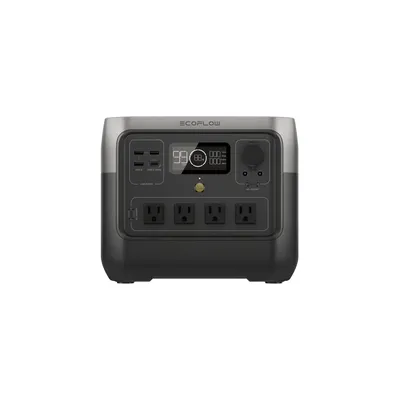
EcoFlow RIVER 2 Pro
768 Wh
800W
1600W
7.8 kg
220W
1.2h
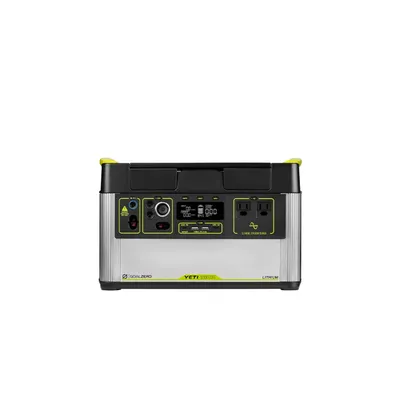
Goal Zero Yeti 1000 Core
983 Wh
1200W
2400W
14.4 kg
300W
4.5h
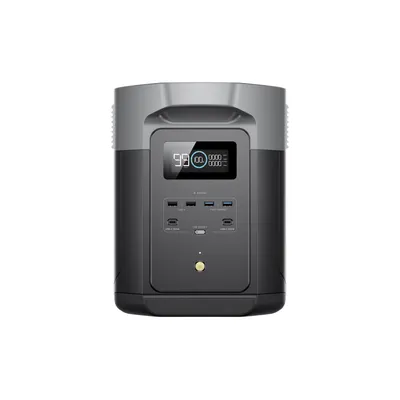
EcoFlow DELTA 2 Max
2048 Wh
2400W
4800W
23 kg
1000W
1.1h
Sources
- EcoFlow DELTA 3 Plus product specifications — EcoFlow (manufacturer)
- Jackery Explorer 1000 Plus product specifications — Jackery (manufacturer)
- Jackery Explorer 2000 Plus product specifications — Jackery (manufacturer)
- EcoFlow RIVER 2 Pro product specifications — EcoFlow (manufacturer)
- CPSC Recalls Database — US Consumer Product Safety Commission